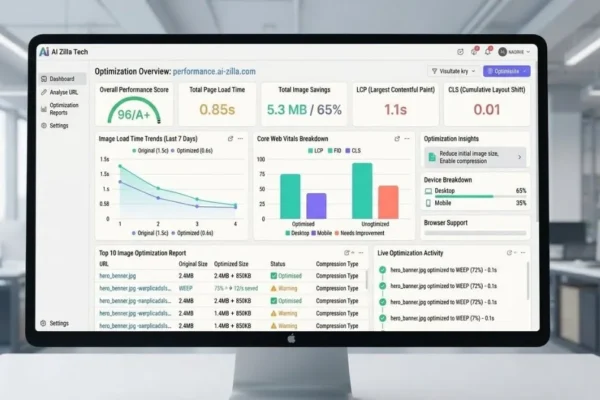
Traditional keywords are obsolete as search engines transform into conversational answer engines, forcing a structural rewrite of modern digital strategy.
The core architecture of web discovery is facing a massive, system-wide overhaul. The entire ecosystem of organic traffic is undergoing a radical transition as conversational AI completely updates search behavior. Google is trading its classic directory layout for a fully automated synthesis system that delivers immediate answers. If your business depends on legacy playbooks—like calculating keyword density or chasing low-quality backlinks—your visibility will quickly disappear. To maintain online presence, content architectures must be built specifically for neural networks and large language model parsing.
Why it matters. This foundational evolution fundamentally alters how consumers access products, services, and real-time updates. When conversational AI interfaces provide direct, comprehensive solutions on the main results page, the standard click-through ecosystem completely disintegrates. Consequently, digital platforms relying heavily on informational traffic must confront a critical turning point: optimize explicitly for machine processing models or risk losing their entire online audience. To fight back, elite marketing teams are shifting their budgets away from standard indexing trackers and investing heavily in specialized AI search optimization tools. These predictive software suites don’t just guess what users type; they simulate how neural networks process information.
Deconstructing the Mechanics of Machine Optimization

Understanding how these next-generation optimization platforms function requires looking past basic metadata. Traditional tools rely on historical search volume metrics and static difficulty scores. Conversely, modern generative engine optimization suites analyze semantic vectors, entity networks, and conceptual clusters. They evaluate how effectively your brand’s content answers complex, multi-layered human intent rather than matching strings of text.
How do AI search tools predict ranking potential within conversational engines? These advanced systems run programmatic simulations across major language models to measure your brand’s “share of citation.” They test thousands of variations of long-tail, conversational queries to pinpoint exactly where an LLM pulls its data. By tracking which references get selected for an AI overview or a conversational answer, the software maps out the exact authority gaps in your current content library.
Furthermore, these tools measure brand sentiment and alignment within algorithmic summaries. If a system discovers that your company is mentioned frequently but rarely cited as the definitive source for a specific solution, it signals a lack of structured proof points. The software then generates architectural recommendations, showing you exactly how to structure your web pages so an AI crawler can extract your data without hesitation.
Comparing the Old Framework to the New Era
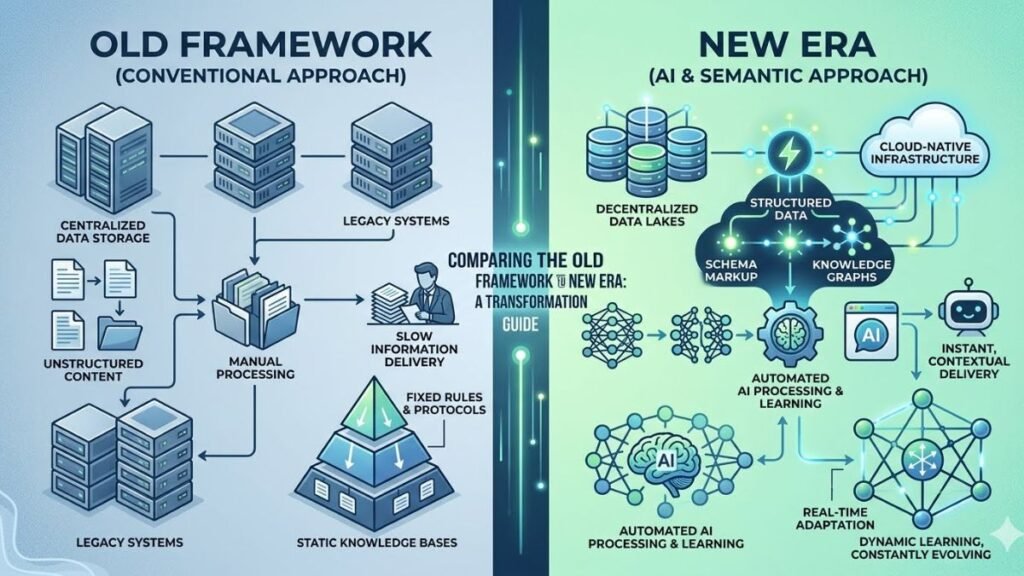
| Traditional SEO Framework | Generative Search Matrix | Optimization Benefit |
| Exact-Match Keywords | Semantic Entity Mapping | Higher alignment with LLM training models and contextual indexing. |
| Page-One Blue Links | AI Overview Citation Share | Direct visibility within the primary conversational interface. |
| Single-Intent Queries | Multi-Step Conversational Prompts | Captures high-intent users navigating deep research phases. |
| Standalone Backlink Volume | Multi-Source Validation Networks | Establishes undeniable brand authority across web graphs. |
| Text-Heavy Static Layouts | High-Density Structured Data Blocks | Allows AI bots to rapidly scrape, digest, and summarize facts. |
Winning a prominent spot in an automated answer engine requires a drastic shift toward high-value information gain. Modern machine learning algorithms are engineered to completely bypass repetitive summaries, duplicated news releases, and shallow corporate marketing fluff. Establishing true topical authority requires your digital assets to deliver genuine information gain that cannot be easily replicated by web scrapers. Achieving this level of visibility involves publishing proprietary research, firsthand operational case studies, distinct industry analysis, or exclusive insights directly from verified subject matter experts.
The key risk. Relying on automated text generation to build your authority creates a destructive feedback loop. If your site merely remixes existing web data, search algorithms will filter your content out as noise. They prefer original source material to ground their answers and minimize hallucinations.
To counteract this risk, you must explicitly define your digital identity through a robust schema architecture. Integrating schema markup functions as a foundational translator for conversational web scrapers. It explicitly defines your organizational identity, core offerings, and overall data validity directly to algorithmic crawlers. By combining structured metadata with persistent brand citations across authoritative external vectors—including industry media, scientific publications, and niche community platforms—you establish a resilient network of digital verification that neural networks must acknowledge.
The Path to Long-Term Digital Authority
What architectures must brands adopt to secure continuous visibility? The solution demands engineering integrated, asset-rich resource matrices that seamlessly satisfy both human audiences and language processing systems. Every asset must feature minimalist structures, maximum scannability, and intuitive semantic categorization. Prioritize highly contextual subheadings, replace complex passive voice with direct action, and anchor essential takeaways directly in your opening sentences to guarantee frictionless machine scraping.
What features should enterprise teams prioritize when selecting optimization software? Look for platforms that offer real-time tracking of conversational responses, automatic entity detection, and clear analysis of your competitive footprint inside automated summaries. Having access to these predictive metrics allows your team to pivot your content strategy before a core algorithm update impacts your bottom line.
Pro tip. Never sacrifice deep editorial value for technical optimization. Networks might categorize and trim your data behind the scenes, but human readers hold the actual purchasing power. When you pair technical optimization with authentic human insights, your brand secures prime visibility, earns regular AI citations, and leads the market inside next-generation search layouts.