The modern web is shifting from indexing strings of text to mapping interconnected entities, turning raw site code into your most valuable organic asset.
The underlying mechanics of online discovery are going through an aggressive, fundamental transformation. As generative models actively rewrite how search results function, Google is moving past its historic role as a basic indexing catalog to operate as a highly sophisticated synthesis system. For digital publishers and brands, this means legacy content strategies built around keyword frequency are quickly losing visibility. If your backend infrastructure isn’t optimized for explicit machine parsing, your site will simply become invisible to the bots powering conversational experiences.
Why it matters. This technological shift changes how millions of users interact with tech products, localized services, and corporate websites on mobile screens. When an automated engine pulls data instantly to answer a user’s prompt directly inside an AI overview, traditional web traffic patterns take a significant hit. For businesses worldwide, surviving this drop requires an immediate shift away from superficial content changes to anchor their site architecture on structured verification. Advanced technical marketing teams are looking past the industry hype to recognize a critical reality: your site must be formatted as distinct concepts rather than plain text strings. This is where deploying advanced schema markup in AI search transforms from a minor development task into an absolute business requirement.
Deconstructing Schema Beyond the SEO Hype
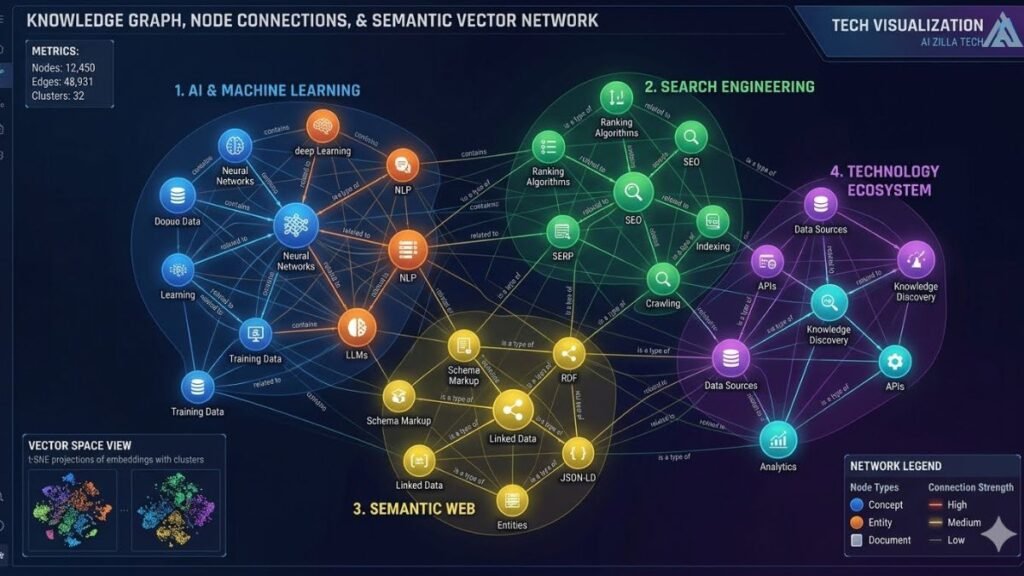
To build a resilient footprint in modern digital ecosystems, tech teams must understand exactly how machine models parse unstructured data. Traditional SEO tools often treat structured data as a simple shortcut used to capture rich snippet star ratings. In stark contrast, modern generative engine frameworks utilize structured data code as a foundational map to navigate complex entity graphs. Instead of guessing the relationship between words on a page, large language models use this semantic formatting to instantly confirm factual variables without running into processing errors.
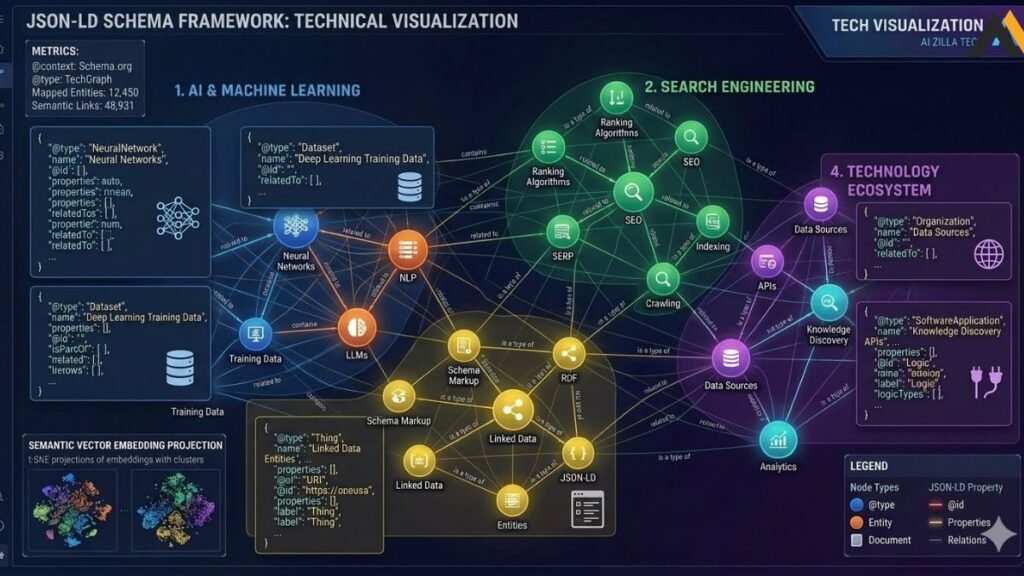
How do machine learning algorithms use your code to choose primary citations? The answer lies in how these systems construct mathematical maps of the world. AI engines process concepts as “entities”—which represent distinct, unique things like a specific brand name, a real-world software product, or a verified author. When your site implements rigorous JSON-LD code arrays, it tells the crawler precisely how your company connects to external data sources across the broader web.
Furthermore, having clean metadata eliminates the risk of an algorithm misinterpreting your brand’s core context. When an AI searches for a trusted answer, it looks for validation across multiple sources. If your technical markup explicitly details your company’s foundation, product listings, and authorship, the LLM can easily cross-reference your content against public data layers. This algorithmic clarity gives you a massive advantage over competitors relying purely on unstructured, long-form articles.
The Big Picture vs The Fine Print
| Strategic Perspective (The Big Picture) | Technical Reality (The Fine Print) | Core Implementation Rule |
| Entity Authority Mapping | Translates plain HTML strings into distinct, interconnected concepts. | Use organization and person markup to anchor your authors. |
| Algorithmic Trust & Clarity | Removes guesswork for web crawlers looking to verify your source data. | Keep your visible on-page copy perfectly identical to your code. |
| AI Overview Footprint | Supports clearer extraction paths during real-time web summary pulls. | Prioritize deep contextual properties like price, author, and dates. |
| Systemic Hallucination Defense | Provides a structured data baseline that prevents bots from guessing facts. | Completely avoid leaving required or highly recommended properties empty. |
The Ground Rules of Entity Graph Construction
Transitioning your tech platform to win within generative search systems means avoiding superficial shortcuts. Simply pasting a basic code template into your CMS plugin will not protect your brand from sudden traffic drops. True generative engine optimization requires a systematic approach to connecting your digital properties. You must explicitly build a verifiable knowledge graph around your company.
The key risk. Hiding data variables inside your backend scripts that don’t match the actual visible text on your page will trigger severe visibility penalties. Modern search engines easily detect discrepancies between code layers and rendered layouts. If an AI crawler detects that your schema is trying to force meaning where there is no unique value or actual expert copy, it will flag the domain as low-trust.
What models should enterprise software companies use to guarantee zero friction? The framework relies on building an unbroken chain of technical verification. Start by utilizing comprehensive product schemas for your core software tools, making sure to anchor those items to a verified parent company using the publisher property. This programmatic link makes it incredibly simple for automated data crawlers to parse your digital ecosystem without confusing your assets with third-party marketplaces.
Engineering Content for Automated Data Ingestion
What architectural layout must modern publishers embrace to maintain their search footprint? The solution relies on deploying data-dense, highly visible information assets that sync with your backend configuration. Write direct, active content layouts that place your critical findings right in your opening lines. This allows machine parsers to capture data models instantly upon arrival.
What specific fields should developers optimize to stand out within conversational engines? Focus your technical workflow on identifying deep entity traits like clear author profiles, detailed product pricing metrics, and exact publication dates. These explicit elements provide the precise context clues that conversational models crave when trying to avoid errors.
Pro tip. Excellent code architecture will never save poor, derivative copy. While deploying robust metadata ensures that automated engines can easily parse your content structure, human buyers are still the individuals executing transaction choices. By blending flawless JSON-LD configurations with genuine human knowledge, your digital footprint will remain highly visible, easily cited, and completely unshakeable in the age of conversational search.