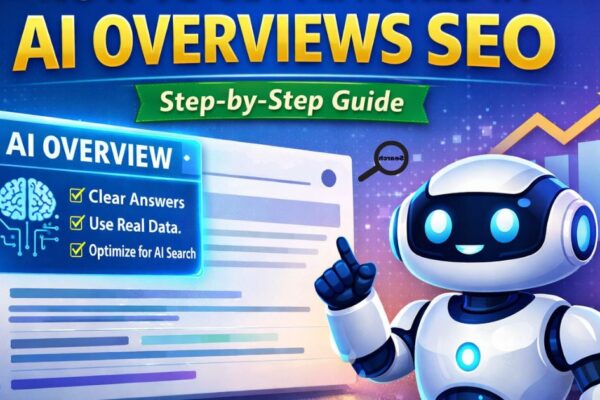
What if AI could think more clearly, reason more deeply, and deliver smarter answers than ever before?
Artificial intelligence is growing faster than ever before, quietly reshaping the way we live and work. At the heart of this change are large language models (LLMs), powerful systems that are learning to understand and generate language in ways that feel increasingly human. But while these models are powerful, their true potential lies in nudging the boundaries of LLM reasoning—guiding them to think more accurately, contextually, and intelligently.
Today, businesses, developers, and content creators are exploring advanced techniques to push AI beyond basic responses. This article breaks down the most effective strategies that are redefining how LLMs reason, solve problems, and generate human-like insights.
Understanding the Concept of Pushing LLM Reasoning Beyond Limits?
At its core, nudging the boundaries of LLM reasoning refers to enhancing how AI models interpret information, make decisions, and produce outputs.
Instead of relying on raw prompts, this approach focuses on:
- Guiding AI thinking step-by-step
- Improving logical consistency
- Reducing hallucinations
- Enhancing contextual understanding
In simple terms, it’s about helping AI “think better,” not just “respond faster.”
Why LLM Reasoning Matters More Than Ever
Modern AI applications demand more than generic answers. Whether it’s SEO, automation, or decision-making, improved reasoning leads to:
- More accurate outputs
- Better user experience
- Higher trust in AI systems
- Smarter automation workflows
This is why nudging the boundaries of LLM reasoning is becoming a key focus in AI development.
Breakthrough Strategies to Enhance LLM Reasoning
1. Chain-of-Thought Prompting
One of the most powerful methods is guiding the AI through a reasoning path.
Instead of asking:
“What is the answer?”
You ask:
“Explain step-by-step how to reach the answer.”
This technique:
- Improves logical accuracy
- Reduces errors
- Encourages deeper analysis
2. Prompt Engineering Optimization
Smart prompts are the foundation of better reasoning.
Effective prompts:
- Provide clear instructions
- Assign clear roles to the AI, such as acting as an expert SEO strategist, to guide its responses effectively.
- Include constraints and examples
By refining prompts, you directly contribute to nudging the boundaries of LLM reasoning.
3. Context Injection
LLMs perform better when they have the right context.
Adding:
- Background information
- Relevant data
- Specific goals
…helps the model generate more precise and meaningful outputs.
4. Multi-Step Reasoning Frameworks
Breaking complex problems into smaller steps allows AI to process information more effectively.
Example:
- Understand the problem
- Analyze possible solutions
- Evaluate outcomes
- Deliver final answer
This structured approach significantly enhances reasoning quality.
5. Feedback Loops and Iteration
AI improves when it learns from corrections.
- Provide feedback on outputs
- Refine prompts based on results
- Iterate continuously
This creates a loop that gradually improves reasoning capabilities.
6. Tool-Augmented Reasoning
Combining LLMs with tools (like search engines, databases, or APIs) enhances their intelligence.
Benefits include:
- Real-time data access
- Fact verification
- Improved decision-making
This is a major step in pushing the limits of AI reasoning.
How This Impacts SEO and Content Creation
For content creators and bloggers, especially in AI niches, nudging the boundaries of LLM reasoning can dramatically improve:
Content Quality
More accurate, insightful, and helpful articles
Google Rankings
Better alignment with search intent and AI Overviews
User Engagement
Content becomes more valuable and trustworthy
Topical Authority
You build expertise in advanced AI topics
Top Strategies to Rank in Google AI Overviews
To ensure your content is favored by Google’s AI systems:
- Write in clear, simple English
- Answer questions directly
- Use structured headings (H2, H3)
- Add real value (not fluff)
- Maintain originality and depth
- Use your focus keyword naturally throughout the article
Common Mistakes to Avoid
While trying to enhance LLM reasoning, avoid:
- Overloading prompts with unnecessary details
- Ignoring context relevance
- Relying on one-shot outputs
- Not validating AI responses
These mistakes limit the effectiveness of your strategies.
Future of LLM Reasoning
The future of AI lies in smarter reasoning, not just bigger models.
Emerging trends include:
- Self-improving AI systems
- Hybrid reasoning models
- Real-time learning capabilities
- Human-AI collaborative thinking
As innovation continues, nudging the boundaries of LLM reasoning will play a central role in shaping next-generation AI.
People also ask
What is LLM? (Large Language Model Explained)
A Large Language Model (LLM) is a type of artificial intelligence system designed to understand, process, and generate human-like language. It is trained on massive amounts of text data, allowing it to predict words, answer questions, write content, and even solve complex problems in natural language.
LLMs are the core technology behind modern AI tools like chatbots, content generators, and virtual assistants.
Examples of LLMs:
OpenAI GPT models (ChatGPT)
Google Gemini
Anthropic Claude
Meta LLaMA
These models are widely used in writing, coding, customer support, education, and research.
What is the Concept of a Nudge?
A nudge is a behavioral design technique that subtly influences decisions without forcing them. In simple words, it guides users toward better choices while still keeping full freedom of decision.
In AI and LLMs, nudges are used to improve how the model thinks, responds, and reasons.
Example:
Instead of asking:
“Give me an answer”
A nudge-based prompt would be:
“Think step-by-step before giving the final answer.”
This small change improves reasoning quality.
What Are the Three Types of Nudges?
Nudges are generally categorized into three main types:
1. Cognitive Nudges
These nudges influence how people think and process information.
They improve clarity, focus, and decision-making.
Example:
Breaking complex tasks into step-by-step instructions.
2. Behavioral Nudges
These nudges guide actual actions and behavior without forcing them.
Example:
Setting a default option like “Yes, subscribe me” to encourage engagement.
3. Digital / AI Nudges
These are used in AI systems and digital platforms to improve user interaction and model responses.
Example:
Prompting an LLM to “explain like a beginner” for better clarity.
What Are the Two Types of LLM?
LLMs can mainly be divided into two major types:
1. General-Purpose LLMs
These models are designed to handle a wide range of tasks like writing, answering questions, summarizing, and coding.
Examples:
ChatGPT (GPT models)
Gemini
Claude
They are flexible and used in many industries.
2. Task-Specific LLMs
These models are trained or fine-tuned for specific domains or tasks.
Examples:
Legal AI models (for legal documents)
Medical LLMs (for healthcare data)
Code-focused models (for programming assistance)
They are more accurate in their specific field.
Conclusion
AI is no longer just about generating text—it’s about generating intelligence. By nudging the boundaries of LLM reasoning, we unlock smarter, more reliable, and more impactful AI systems.
Whether you’re a developer, marketer, or content creator, mastering these strategies can give you a competitive edge in the rapidly evolving AI landscape.