Autonomous Machine Networks Replace Legacy Indexing Playbooks with Real-Time Context Orchestration
A silent structural revolution is sweeping through the backend architectures of global web retrieval systems as autonomous software ecosystems replace human-managed analytics. These specialized frameworks, widely recognized as enterprise SEO agents, operate as self-correcting cognitive pipelines that dynamically monitor, write, audit, and restructure web properties without human intervention. Instead of relying on static weekly status reviews, these automated entities analyze shifting algorithmic weights minute by minute. The rapid deployment of these autonomous multi-agent tech systems marks a historic transition from defensive, reactive keyword optimization to offensive, predictive digital market share dominance.
Why it matters. This isn’t a simple software update or a basic generative text plugin for freelance copywriters. It’s an absolute infrastructure overhaul for global content networks and enterprise media portfolios. For decades, scaling an online presence required massive human operations: hiring developers, contracting data analysts, and managing extensive copywriting teams. Today, that operational footprint is contracting. If your digital properties don’t deploy automated agentic networks to defend their keyword clusters, your entire visibility map faces immediate marginalization. Recent platform indexing data reveals that legacy web properties relying purely on manual updates lose up to 55% of their organic visibility to agent-driven networks within weeks of core algorithmic shifts.
Dismantling Manual Search Engine Optimization Workflows
The current integration of agentic systems forces corporate digital marketing divisions to abandon traditional, slow analytical processing cycles. By using autonomous continuous looping frameworks, these AI systems identify structural code errors and semantic content gaps before standard tracking tools even register an algorithm update.
The automated moat. Beneath the public content interface, an autonomous agentic pipeline constantly runs a loop of data ingestion, structural correction, and immediate redeployment. Traditional search management tools provide historical reports on historical data. However, next-generation AI agents execute predictive live code injections to capture emerging search behaviors before competitors spot the trend. How will human digital strategists survive in a market entirely dominated by rapid, sub-second autonomous decisions? The answer requires a total shift in skill focus. As automated systems handle the heavy lifting of raw optimization, human creators must step up to act as high-level data orchestrators and primary source verifiers.
Evaluating the Structural Layout Shift: Legacy vs. Agentic Workflows
To understand the sheer magnitude of this search engine revolution, we must analyze the vast operational divide between standard manual marketing cycles and automated agentic clusters.
Re-Engineering the Web Architecture for Agentic Crawlers
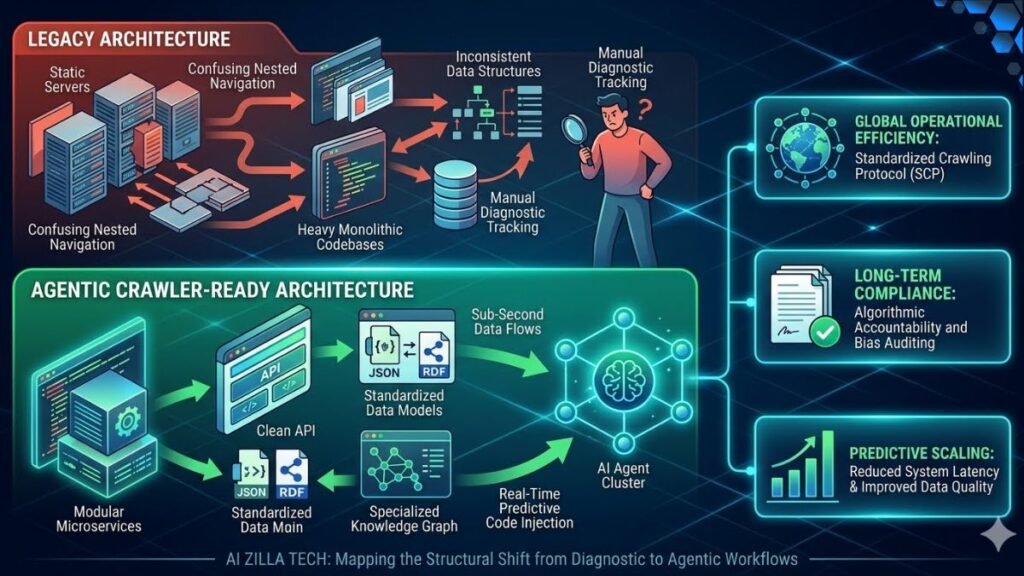
What are the long-term operational and compliance implications for global technology companies managing large, complex content networks? As advanced retrieval networks increasingly use automated processing frameworks to evaluate web pages, enterprise portals must completely change how they map data connectivity. Sticking to old keyword-density models is no longer a viable multi-year corporate strategy.
Pro tip. If you direct an engineering crew or coordinate digital distribution channels, do not optimize your data structures solely for standard human viewports. You must rebuild your underlying data architectures to cater directly to automated web scraping systems and vector lookups. Implement deep JSON-LD node systems and clean, responsive HTML data grids across every asset. This structural engineering allows autonomous digital crawlers to perfectly index, understand, and pull your brand’s core data points into conversational answer blocks without burning server compute on useless front-end clutter.
Why Information Gain Protects Against Autonomous Scraping
The widespread launch of autonomous optimization software has exposed massive flaws in basic, automated content farms. For years, low-tier digital media portals built up web search volume by simply rephrasing public information across thousands of shallow pages. The current platform evolution proves that high information gain is the ultimate shield against algorithmic erasure.
The systematic shift. This technological migration builds an impenetrable barrier around authoritative, deeply original web properties. By prioritizing proprietary data, first-hand research, and exclusive technical case studies, autonomous crawlers can easily separate high-value industry domains from surface-level clickbait. Major tech networks are rapidly expanding their private data agreements, enterprise brands are locking down their proprietary data centers using secure code rules, and companies with real domain authority are capturing permanent conversational search traffic. This shifts the digital landscape into an exclusive space, completely locking out independent publishers who lack the resources to build real-world data networks or maintain highly structured semantic pipelines.
The Enterprise Playbook for Managing Agentic Content Pipelines
As a technology officer or digital leader navigating this operational transition, your path forward demands a total realignment of your data deployment systems. The era of managing static web properties is officially over. You must structure your enterprise systems to handle the lightning-fast demands of automated data processing networks.
The execution step. Begin auditing your infrastructure’s automated machine readability scores today. Determine exactly where your core brand assets, product documentation sheets, and expert case guides live inside your technical framework. Ensure your software engineering teams embed highly responsive semantic code and explicit data tables into every high-intent page. Taking this proactive step guarantees that no autonomous SEO agent or next-generation search engine can overlook your digital assets when resolving high-volume transactional queries in real time.