As artificial intelligence reshapes the financial sector, the line between software and human judgment is blurring—leaving millions of professionals asking if their degrees are becoming obsolete.
The sudden expansion of generative large language models has triggered an unprecedented restructuring across global corporate finance. Historically, pursuing a career in corporate finance served as the gold standard for long-term professional security and economic resilience. However, modern autonomous enterprise systems now execute multi-currency ledger adjustments instantaneously, deploy predictive algorithmic fiscal modeling, and isolate accounting irregularities with an analytical speed that human audit departments cannot match. This aggressive technological transformation has initiated a high-stakes paradigm shift across Wall Street and international corporate networks: Is artificial intelligence systematically phasing out human accountants, or are we experiencing a profound structural evolution of elite financial expertise?
The human disruption. This shift is no longer a distant projection; it is actively transforming corporate operational architectures. Early-career accounting graduates now face immediate automation pressures as entry-level workflows are systematically absorbed by autonomous software systems. As enterprise organizations aggressively integrate advanced machine learning pipelines, the traditional role focused entirely on mechanical calculation is fundamentally breaking down. Yet, the deep industry narrative is not one of total workforce erasure but rather a profound structural evolution that forces us to redefine the exact baseline parameters of financial expertise.
Strategic Deep-Dive: Industry Foresight & FAQ Matrix
To contextualize the macroeconomic velocity of automation, we must address the critical structural milestones facing the global financial architecture over the next few decades.
Will accounting be replaced by AI?
Artificial intelligence will systematically dismantle administrative and clerical accounting tasks, but it is structurally incapable of replacing professional accounting practitioners. Automated software systems operate within rigid, programmatic bounds to process historical mathematical records. Conversely, contemporary corporate finance relies on abstract human intelligence to navigate labyrinthine global tax codifications, negotiate nuanced mergers, and provide ethical corporate oversight during macroeconomic volatility. Because algorithms cannot absorb legal or corporate liabilities within a judicial tribunal, human authentication remains a non-negotiable anchor of the global economic framework. AI will not eliminate the accountant; rather, the data-driven augmented professional will permanently replace practitioners who reject technological adaptation.
What jobs will be eliminated by AI by 2030?
By 2030, systemic workforce contraction will primarily target standardized, highly repetitive data manipulation, structural transaction administration, and basic informational processing roles. The imminent wave of enterprise automation is targeting structural labor categories that rely on predictable inputs and static rulebooks. The specific occupations facing severe decline or near-total elimination within this decade include traditional manual data ingestion clerks, foundational ledger bookkeepers, basic financial underwriters, and legacy text compilers. These operations are being systematically absorbed by unified cloud pipelines running advanced cognitive intelligence frameworks.
Will AI replace accounts payable jobs?
The transactional administrative functions of Accounts Payable (AP) are highly vulnerable, with standard operational structures facing near-total automation. Contemporary AP workflows are heavily dependent on explicit document management, tracking invoice quantities against purchase orders, and logging numerical balances. Modern cognitive accounting systems execute frictionless digital pipeline ingestion—automatically cross-checking supplier invoices against decentralized bills of lading and processing digital bank clearances without human touchpoints. The role is transitioning to an exceptions-only management structure, requiring only a skeleton staff of human forensic controllers to settle active contract conflicts and verify large, high-risk capital distribution paths.
Will AI replace accountants by 2060?
By 2060, the traditional conceptual framework of standard accounting will be extinct, entirely subsumed by high-level systemic risk engineering, algorithmic economic auditing, and corporate governance architecture. Looking ahead four decades, standard data entry and basic operational strategy will be fully autonomous. The 2060 practitioner will function as a strategic wealth architect and algorithmic system auditor. Their core professional responsibility will be overseeing the complex AI engines that run global financial networks, optimizing decentralized global taxation models, and steering long-term investment vectors amid climate and technological paradigm shifts.
The Automation Wave: What AI is Already Eating
To accurately evaluate where corporate finance is migrating, we must chart the specific administrative tasks that algorithms have completely secured. High-volume bookkeeping routines operate on explicit, rules-based logic, making them prime targets for automated machine learning processing.
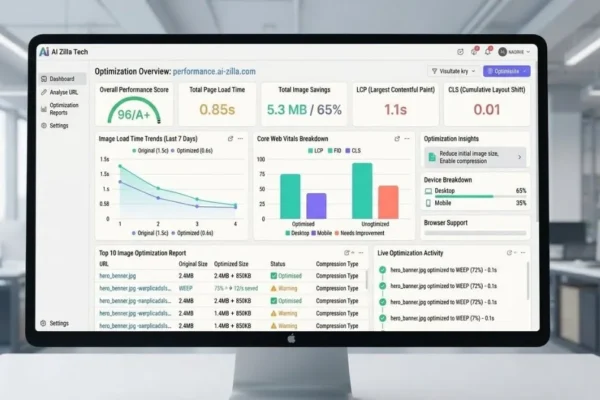
Why it matters. Contemporary cloud ecosystems have fundamentally integrated cognitive document intelligence with advanced neural processing frameworks. These automated pipelines seamlessly ingest supplier billing statements, parse unstructured, decentralized transaction receipts, map organizational expenses straight to massive general ledgers, and execute frictionless real-time banking audits without human touchpoints. Consequently, the reliance on traditional legacy keyboard data ingestion is reaching its absolute point of extinction.
Autonomous financial platforms effortlessly evaluate conventional archival filing data to detect surface-level arithmetic mismatches, yet they remain systematically restricted from architecting autonomous enterprise fiscal roadmaps. Institutional oversight of enterprise tax liabilities—inextricably tethered to the sprawling statutory codification of the United States Internal Revenue Service—operates as a fluctuating economic ecosystem routinely upended by erratic legislative mandates and shifts in judicial interpretation.
While mathematical models demonstrate exceptional proficiency in processing rigid historical parameters, they fundamentally lack the critical cognitive abstraction necessary to navigate fluid regulatory ambiguities. Relying entirely on unverified system computations inherently subjects a corporation to catastrophic compliance exposures absent authoritative executive validation.
The Human-Machine Functional Balance Matrix
To see how the daily operational burden is dividing, we must analyze the clear operational separation between autonomous systems and human executives.
| Financial Operation | The Autonomous AI Domain (Speed & Scale) | The Human Expert Domain (Context & Strategy) |
| Data Ingestion | Extracts tabular text from millions of loose documents via OCR. | Resolves corrupt data strings, missing context, and complex vendor disputes. |
| Audit & Detection | Flags statistical anomalies across vast financial databases instantly. | Uncovers deliberate corporate fraud and proves malicious intent. |
| Tax Engineering | Automates mathematical totals based on pre-existing static law. | Architects cross-border asset integration, mergers, and legal loopholes. |
| Corporate Advisory | Runs predictive cash-flow simulations using purely historical inputs. | Transforms raw financial vectors into empathetic boardroom negotiations. |
| Legal Sign-Off | Scans documentation for missing required compliance markers. | Approves statutory filings while bearing individual professional liability. |
Why the Human Element Remains Irreplaceable
The absolute fear of total job displacement ignores a fundamental axiom of global commerce: corporate operations are intrinsically human, dependent on ethical compromise, trust, and strategic relationship building.
The ethical barrier. Automated systems do not possess moral agency. A neural network cannot navigate an abstract ethical crisis, such as consulting a vulnerable regional enterprise on debt restructuring during a macroeconomic collapse or managing volatile stakeholder sentiment. Critically, an algorithmic framework cannot be held civilly liable or face criminal indictment within a judicial tribunal. When an enterprise submits its mandatory corporate disclosures, a licensed fiduciary must legally attest to those accounts, absorbing total personal, professional, and regulatory accountability for the integrity of the data.
How will AI alter the day-to-day workflow of future accountants?
The emerging practitioner will shift permanently from a structural data compiler into a high-level strategic data translator. Instead of allocating the majority of their billable hours to data preparation and sorting, professionals will utilize automated systems to instantly surface foundational metrics. This allows them to focus entirely on advising corporate executives on risk containment, capital allocation, and market expansion. The technology serves as a force multiplier, shifting the accounting department from an administrative cost center into a primary driver of boardroom strategy.
The consulting shift. Independent business owners do not want to discuss corporate survivability with an automated chatbot. They demand a trusted human partner who thoroughly understands regional market pressures, individual risks, and systemic economic anxieties. The ultimate premium value of a modern accountant rests in their distinct ability to look past the literal spreadsheet and build a narrative that guides human execution.
The Emergence of the Hybrid Financial Architect
The professionals facing definitive career risk are not those who analyze automation but those who actively refuse to integrate it. The industry is moving toward a permanent hybrid standard: the tech-augmented professional.
The industry verdict. Tier-one academic consortiums and foundational regulatory bodies—most notably the American Institute of CPAs (AICPA)—are actively restructuring their baseline professional blueprints to prioritize complex computational data modeling, system-wide algorithmic verification, and strategic human-to-human consulting dynamics.
Major global software platforms are explicitly not building systems to eliminate human talent; they are engineering digital co-pilots designed to strip away administrative friction.
Pro tip. For aspiring financial scholars and active corporate practitioners evaluating the contemporary macroeconomic climate, strategic survival demands an immediate professional reallocation: master systematic algorithmic data verification, develop fluency in interpreting abstract data intelligence graphics, and build specialized command over corporate governance. Cultivate individual expertise that functions as the non-negotiable critical link connecting autonomous processing architecture with high-stakes boardroom execution.
Ultimately, artificial intelligence will not replace accountants. However, accountants who master artificial intelligence will inevitably replace those who do not. The profession is not disappearing—it is finally being liberated from the mechanical burden of manual ledger processing.