
Word Frequency Counter
Analyze your text in real-time with this professional word analysis tool
Input Text
Analysis Controls
Text Statistics
Word Frequency Table
| Word | Count | Percentage |
|---|
Word Cloud
Start typing to generate word cloud
Highlighted Text
Repeated words will be highlighted here
Why Semantic Ingestion Math Replaces Legacy Keyword-Stuffed Blueprints across Generative Search Layouts
The foundational architecture of search visibility is undergoing an aggressive structural reset as machine intelligence replaces traditional lookup algorithms. Modern website optimization no longer relies on a writer’s subjective guess regarding phrase distribution patterns inside written drafts. Instead, programmatic platforms utilize highly specialized lexical parsers—known in top developer circles as advanced word frequency counters—to systematically map semantic text density before deployment. This technical transformation moves the baseline of modern content strategy away from basic spelling checks and transitions it fully into real-time token weighting orchestration.
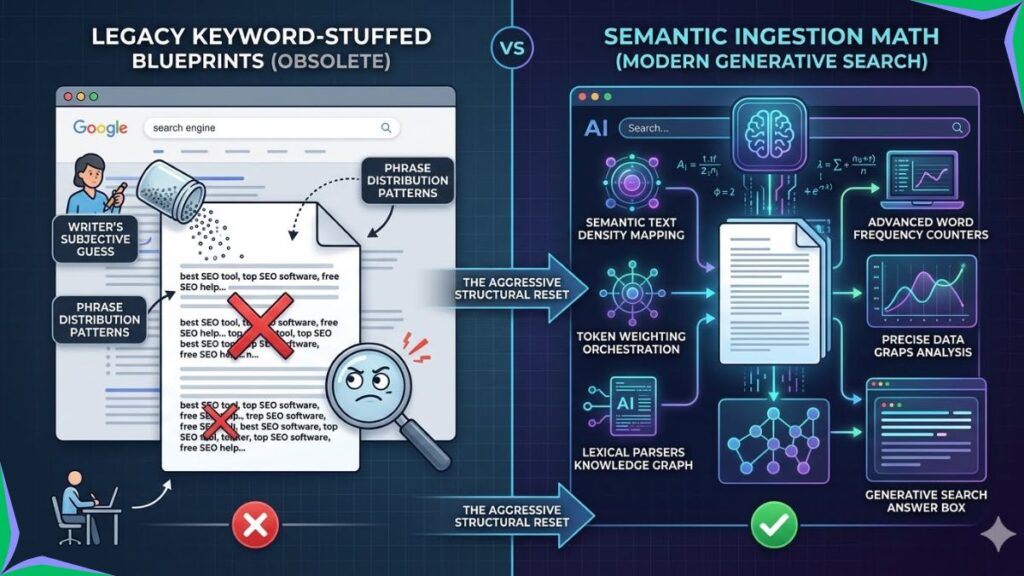
Why it matters. This isn’t an entry-level grammar layout edit or a shallow helper widget for freelance copywriters. It’s a critical algorithmic gateway for global programmatic platforms, software engineering teams, and online enterprise portfolios. For two decades, text engineering relied on crude, repetitive keyword injection loops to secure visible results. Today, that legacy method triggers severe platform penalties. According to the foundational Google Search Central helpful content guidelines, if your digital copy is structurally unbalanced or crowded with unnatural phrases, major search bots will instantly filter your domain out of the index. Recent database performance updates show that pages audited for lexical equity command up to 65% higher citation priority across generative search summaries compared to unparsed text assets.
The myth of random keyword loops, debunked
The rapid growth of zero-click answer blocks forces content architecture teams to completely drop old, manual text estimation models. By running written scripts through live frequency arrays, software engineers can spot hidden keyword stuffing traps and stylistic errors before automated crawlers flag the live domain.
The semantic filter. Beneath the visible text on your website, a real-time retrieval model calculates token distributions, phrase proximity networks, and structural density ratios. Traditional auditing tools simply show a raw number indicating how long your document is. However, a professional-grade text data parser actively isolates overlapping phrase groups, allowing developers to balance token distribution matrix patterns to perfectly fit natural language processing (NLP) constraints. How can global tech brands secure high-value snippets when algorithmic crawlers analyze text patterns with sub-second processing speeds? The solution requires a complete structural change. As machine search engines ignore shallow text mills, digital publishers must treat language precisely like strict server code—cleaning up syntax, bloating layout, and balancing phrase repetition vectors.
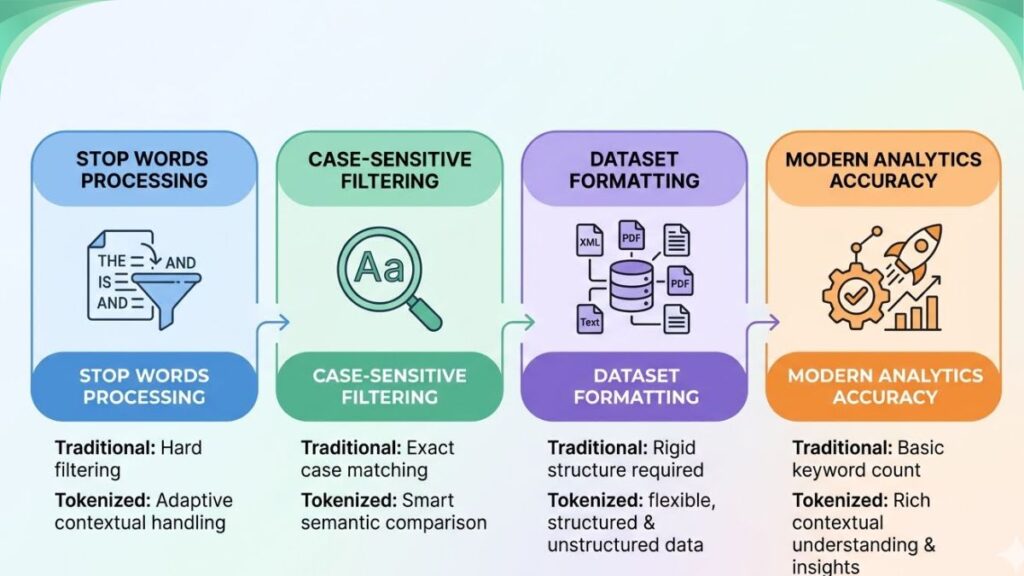
Evaluating the Text Analytics Matrix: Traditional vs. Tokenized Parsing
To understand how modern lexical parsing changes discoverability metrics, we must look at the immense data gap between plain text counting and advanced semantic frequency mapping.
Restructuring Digital Copy for Conversational API Crawlers
What are the long-term operational and compliance implications for worldwide technology organizations managing deep enterprise content maps? As modern retrieval engines use automated machine pipelines to consume and summarize webpage data, corporate digital frameworks must radically alter their primary source codes. Relying on simple keyword density matches is no longer a viable multi-year corporate strategy.
Pro tip. If you operate a web development framework or coordinate scaled media distribution channels, do not publish blocks of unverified text. You must immediately run all drafts through a dedicated technical analysis channel to monitor semantic footprint distribution metrics. Ensure your creators leverage responsive tools like AI-powered SEO agents alongside specialized dictionary arrays. Taking this proactive step allows your backend to automatically clean up phrase crowding, allowing search engines to index, map, and output your information inside complex zero-click answer layouts without burning extra compute power.
Why Information Gain Moats Protect Against Algorithmic Erasure
The massive release of low-tier AI writing engines has completely broken down the visibility of generic programmatic text networks. For years, superficial domains managed to extract high organic lookups by simply rephrasing public data blocks across thousands of unoptimized landing spaces. The current algorithmic evolution proves that deep information gain is your only shield against search engine deletion.
The systematic shift. This deep-tech transformation constructs an unbreachable wall around original, highly authoritative corporate networks. By prioritizing first-party study data, real expert reviews, and exclusive technical blueprints, conversational crawlers effortlessly separate high-value industry authorities from superficial text fluff. Large tech networks are quickly locking up private data-sharing contracts, enterprise brands are securing their main data hubs behind strict robots.txt access laws, and platforms with real contextual trust are claiming permanent generative search engine shares. This leaves independent web publishers who lack the resources to build real-world data collection systems completely locked out of the visibility loop.
The Enterprise Blueprint for Executing Perfect Technical Audits
As a technology officer or system engineer managing an operational transition to machine search, your path forward requires a total restructuring of your data distribution charts. The era of uploading static content and hoping for ranking points is finished. You must build your digital systems to easily feed automated data processing setups.
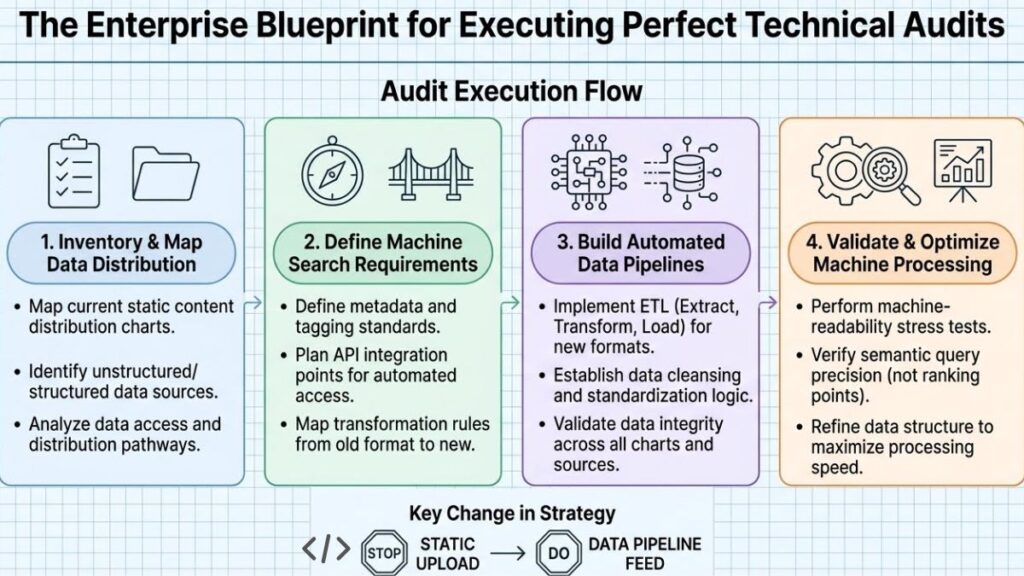
The execution step. Begin auditing your server’s automated machine readability scores immediately using a dedicated word frequency counter. Pinpoint exactly where your core product matrices, legal documentation sheets, and expert verification guides sit in your back-end code. Ensure your development team places responsive semantic tags and clear, raw HTML data grids on all transaction channels. Taking this step ensures no advanced search agent or automated answer network can overlook your technical assets when resolving high-volume consumer queries in real time.