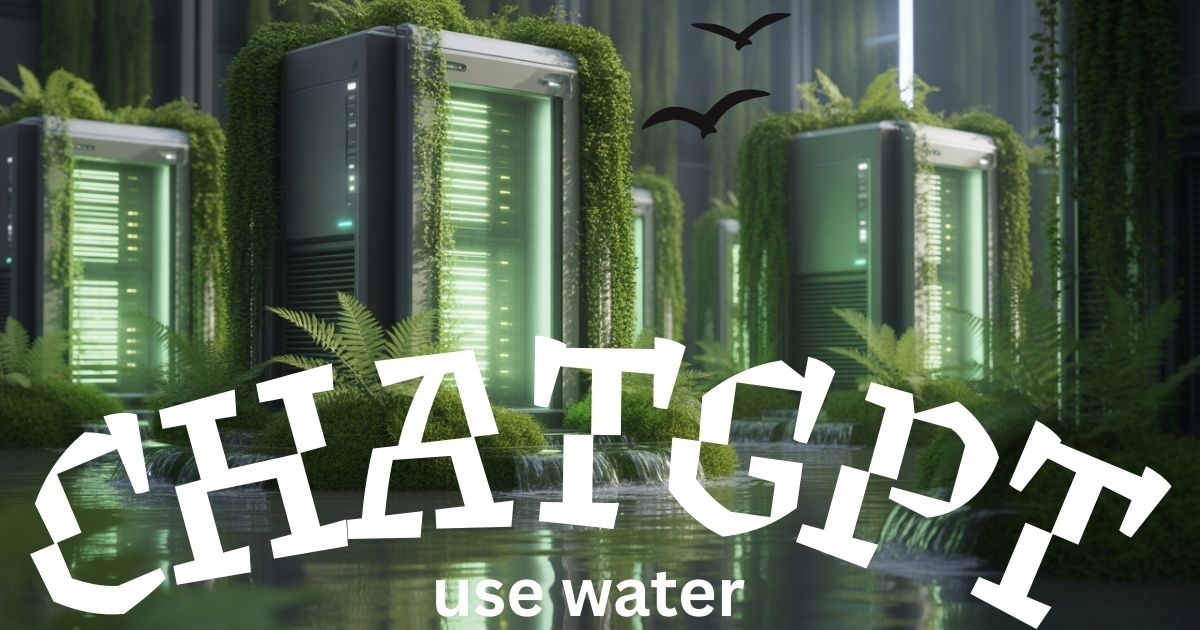
How Much Water Does ChatGPT Use? As AI becomes ubiquitous, its environmental footprint is growing. From powering data centers to running millions of prompts, ChatGPT consumes significant water resources. This article uncovers the hidden water usage of AI and ways to reduce its impact.
How much water does ChatGPT use?
The answer reveals an often-overlooked environmental cost of AI: water consumption. In this article, we’ll break down how ChatGPT uses water, why AI data centers depend on it, how significant the impact really is, and what this means for the future of sustainable AI.
Understanding the Infrastructure Behind ChatGPT
ChatGPT does not run on a laptop or a single server. It operates on large-scale cloud data centers filled with thousands of high-performance servers.
These servers:
- Run continuously
- Consume enormous amounts of electricity
- Generate intense heat
To prevent overheating and hardware failure, data centers rely heavily on cooling systems, and many of those systems use water.
This is where ChatGPT’s water usage comes in—not directly, but indirectly through data center cooling.
How Does ChatGPT Use Water?
1. Water-Based Cooling Systems
Most modern data centers use one of the following cooling methods:
- Evaporative cooling
- Chilled water cooling
- Cooling towers
In these systems, water absorbs heat from servers and then evaporates or circulates to dissipate that heat. The hotter and more powerful the AI workload, the more cooling—and water—is required.
Large AI models like ChatGPT are computationally expensive, especially during:
- Model training
- Peak usage periods
- Large-scale inference (millions of daily queries)
2. AI Training Requires More Water Than AI Usage
There are two phases where AI consumes resources:
Training Phase (Very High Water Use)
Training large language models can take weeks or months, running thousands of GPUs non-stop. This phase consumes significantly more water than normal daily usage.
Inference Phase (Daily Use)
Every time you ask ChatGPT a question, servers still generate heat—but far less than during training.
Even so, at massive scale, daily usage adds up.
How Much Water Does ChatGPT Actually Use?

While companies don’t publish exact numbers for ChatGPT alone, researchers and industry estimates give us a useful picture.
According to research cited by the University of California, Riverside, training a large AI model can consume millions of liters of water, depending on location and cooling method.
Some estimates suggest:
- One AI query can indirectly consume a fraction of a liter of water
- Millions of daily queries = substantial cumulative water usage
This doesn’t mean each ChatGPT question wastes water—but at global scale, the impact becomes meaningful.
Why Data Center Location Matters
Water usage depends heavily on where the data center is located.
Factors that influence AI water consumption:
- Local climate (hot regions need more cooling)
- Water scarcity
- Cooling technology used
- Energy source (renewables vs fossil fuels)
For example:
- A data center in a hot, dry region uses more water
- A center in a cool climate may rely more on air cooling
This is why AI sustainability discussions increasingly focus on data center placement.
The Environmental Impact of AI Water Usage
1. Stress on Local Water Supplies
In water-scarce regions, large data centers can compete with:
- Agriculture
- Local communities
- Drinking water systems
2. Carbon + Water Footprint Combined
AI doesn’t just have a carbon footprint—it has a water footprint too. The two are deeply connected.
3. Growing Demand for AI
As AI tools like ChatGPT become more popular:
- More servers are needed
- More cooling is required
- Water demand increases unless efficiency improves
Is ChatGPT Bad for the Environment?
Not necessarily—but it does raise important questions.
AI provides huge benefits:
- Productivity
- Education
- Accessibility
- Innovation
The goal is not to stop AI, but to make it more sustainable.
How Tech Companies Are Reducing AI Water Usage

Major AI and cloud providers are actively working on solutions:
1. Water-Efficient Cooling
- Closed-loop cooling systems
- Advanced heat exchangers
- Reduced evaporation loss
2. AI-Optimized Infrastructure
Ironically, AI itself is being used to:
- Optimize cooling
- Reduce waste
- Predict temperature spikes
3. Renewable Energy Integration
Using clean energy reduces indirect water use tied to power generation.
4. Water Stewardship Programs
Some companies invest in:
- Water restoration projects
- Community water access
- Recycling wastewater
What Does This Mean for the Future of AI?
As AI adoption accelerates, sustainability will become a competitive advantage.
Future trends include:
- Low-water data centers
- AI models optimized for efficiency
- Transparent reporting of water and energy use
- “Green AI” as an industry standard
The question “how much water does ChatGPT use” is part of a larger shift toward responsible AI development.
What Can Users and Developers Do?
For Users
- Be aware, not afraid
- Support companies that prioritize sustainability
- Use AI responsibly, not wastefully
For Developers & Businesses
- Optimize prompts and workflows
- Reduce unnecessary AI calls
- Choose sustainable cloud providers
Small efficiencies, multiplied by millions of users, make a real difference.
Key Takeaways “How Much Water Does ChatGPT Use?”
- ChatGPT uses water indirectly through data center cooling
- AI training consumes far more water than daily usage
- Scale is the real issue—millions of users add up
- Location and cooling technology matter
- Sustainable AI is possible and already underway
Understanding these hidden costs helps us build a future where AI innovation and environmental responsibility go hand in hand.
External References
- U.S. Department of Energy – Data Center Cooling
https://www.energy.gov/eere/buildings/data-centers - University of California, Riverside – AI Water Footprint Research
https://www.nature.com/articles/s41545-023-00245-9 - International Energy Agency – Data Centres and Energy
https://www.iea.org/reports/data-centres-and-data-transmission-networks
People also asked (How Much Water Does ChatGPT Use)
Does using ChatGPT waste water?
Using ChatGPT does not directly waste water, but it does indirectly contribute to water usage. ChatGPT runs on powerful data centers that require cooling, and many cooling systems use water to manage heat. The water impact comes from infrastructure, not from individual users intentionally wasting resources.
How much water does AI use in a day?
AI water usage varies by model size, data center location, and cooling technology. Large AI systems running at global scale can collectively use thousands to millions of liters of water per day for cooling data centers, especially during peak usage and training periods.
What are the 7 main types of AI?
The seven commonly recognized types of artificial intelligence are:
Reactive Machines
Limited Memory AI
Theory of Mind AI
Self-Aware AI
Narrow AI (Weak AI)
General AI (Strong AI)
Superintelligent AI
Most AI tools today, including ChatGPT, fall under Narrow AI and Limited Memory AI categories.
Is ChatGPT hurting the environment?
ChatGPT itself is not inherently harmful to the environment, but like all large-scale digital services, it has an environmental footprint related to energy and water use. The overall impact depends on how efficiently data centers operate and how much renewable energy and water-saving technology is used.
How Much Water Does ChatGPT Use?
ChatGPT uses water indirectly through data center cooling. While exact numbers aren’t published, millions of daily queries can lead to significant cumulative water usage, especially during AI model training.
Leave a Reply